
Local source note: Sheriff Ralph E. Kersey's office maintains the public-safety channels described here. The North Carolina Department of Adult Correction is a separate state-custody source, not a substitute for a county warrant list.
The Scotland County Most Wanted List
The official posting lives at the Scotland County Southern Software Most Wanted page, run by the Sheriff's Office. When an active entry exists, the page can show photos and identifying details. But it is a targeted notice. It is not the county's whole warrant inventory, nor a copy of the jail roster. Those tools answer different questions. The roster tells you who is in custody right now; the wanted page asks for help locating someone. A person flagged as wanted may not be held in Scotland County. An inmate in Current Confinements may not be wanted at all. Names, photos, charge descriptions, and warrant details all come from the agency's own publication. For anything beyond that, the court record tells the rest of the story.
Safety first. Never approach, follow, threaten, or try to detain anyone shown on a wanted page. If there is immediate danger, call 911 right away. For non-emergency information, use the Sheriff's official phone or tip route.
The official page is a source reference, not a photo gallery.
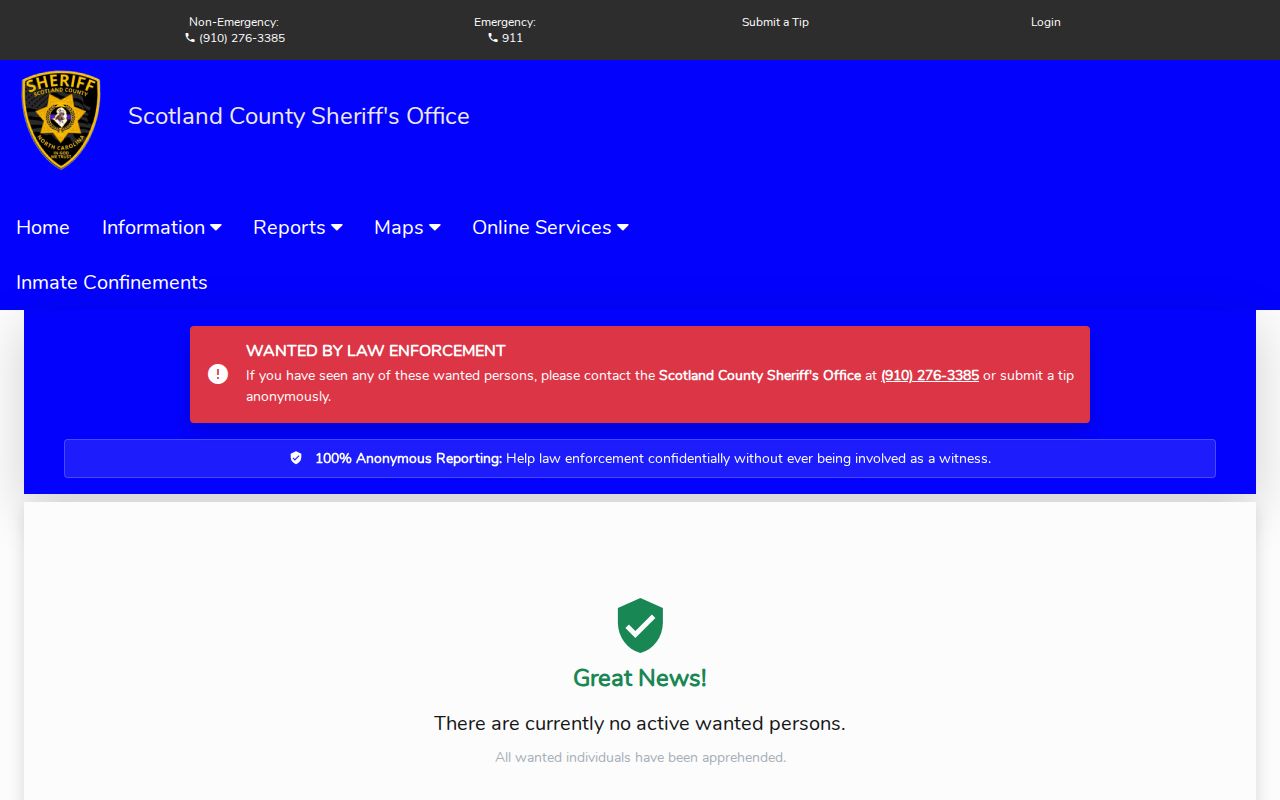
A listing can vanish after an apprehension, and a new one can appear the same day. Always verify the live page before relying on anything you saw earlier.
What a Wanted Listing May Show
No two entries promise the same fields. Whatever the official page shows for a given person, treat the visible details as agency-provided identifiers and compare them carefully.
| Field | How to read it |
|---|---|
| Name | The person’s name as entered by the agency. A name alone is not a positive identification. |
| Photo | A booking or identification image when the SCSO page has released one. It is not proof of guilt. |
| Warrant or charge basis | The agency’s description of the legal reason for the notice. The wording may not be the court’s final result. |
| Physical description | Only the details displayed by the source. Do not use them to confront or track anyone. |
| Last known information | May help law enforcement evaluate a tip, but it is not a guarantee of current location. |
| Contact instruction | The official phone or anonymous-tip direction supplied with the list. |
| List status | An active or removed entry can change without notice after apprehension or correction. |
A wanted listing will not tell you whether the person sits in custody today, whether the warrant is still active, or how the case eventually ended. Those answers come from the issuing authority or the court.
How to Read the Wanted Page
Think of the list as a public tip aid rather than a starting point for a personal investigation. The safest workflow is:
- Open the official SCSO Most Wanted page and note the date or current page state.
- Read the complete entry, including name, image, warrant or charge description, and contact instructions.
- Compare identity details cautiously. Do not make a decision from a similar face or common name.
- If you have information, use the official tip route or contact SCSO. Do not post the person’s location publicly.
- If the question is whether a specific warrant exists, use the criminal-papers search and then confirm with the Sheriff’s Records Division or Clerk of Superior Court.
- For a booking after apprehension, use the Scotland County roster and booking guide. A later booking row still contains charges.
The SCSO social-media page rounds up the office's official Facebook, X, Nextdoor, YouTube, and Instagram accounts. Social posts can add public-safety context between updates. They still cannot replace the live wanted page or a clerk-confirmed warrant status.
Tips, Anonymity, and Contact
Scotland County's official portal offers a Tip Submission form where contact details and Crime Stoppers information are optional. The SCSO crime-programs page describes anonymous tip options as well. The list itself directs the public to call SCSO at 910-276-3385. Stick to those official routes. Let trained personnel decide what happens next.
Tip contact: Scotland County Sheriff's Office, 910-276-3385. For an emergency or immediate threat, call 911 instead. No standing reward amount or guaranteed payment has been posted, so do not count on one.
An anonymous tip lets you share information without becoming part of a public social-media exchange. The county's Mobile Patrol description includes arrest-warrant and most-wanted notifications. A notification alone, though, is not warrant confirmation. Alerts can also cover BOLO, missing-person, and wanted-person categories through the official alerts signup. Anyone actually facing a warrant should contact an attorney or the court. You will not find evasion instructions here, advice for dodging service, or a way to resolve a warrant through a website.
Wanted List Versus Warrant Check
Keep these two searches separate. The Most Wanted page is a curated public list that may carry photographs and a request for tips. The Criminal Papers Search serves a different role as the county portal's warrant-related candidate path. SCSO Records maintains warrants and court orders. The Scotland County Clerk of Superior Court can be reached at 910-266-4400.
| Question | Route | Confirmation limit |
|---|---|---|
| Who is publicly listed as wanted? | Official Most Wanted page | The list is dynamic and selective. It is not every warrant. |
| Does a paper or criminal record appear indexed? | Criminal Papers Search | A hit needs agency or clerk confirmation. Names can match incorrectly and status changes. |
| What did the court do? | Scotland County Clerk and NC court access | A court disposition is separate from the wanted notice. |
| Was a person booked? | SCSO Current Confinements or admit windows | Roster presence is custody information, not guilt. |
The official criminal-papers search is shown here as a navigation reference.
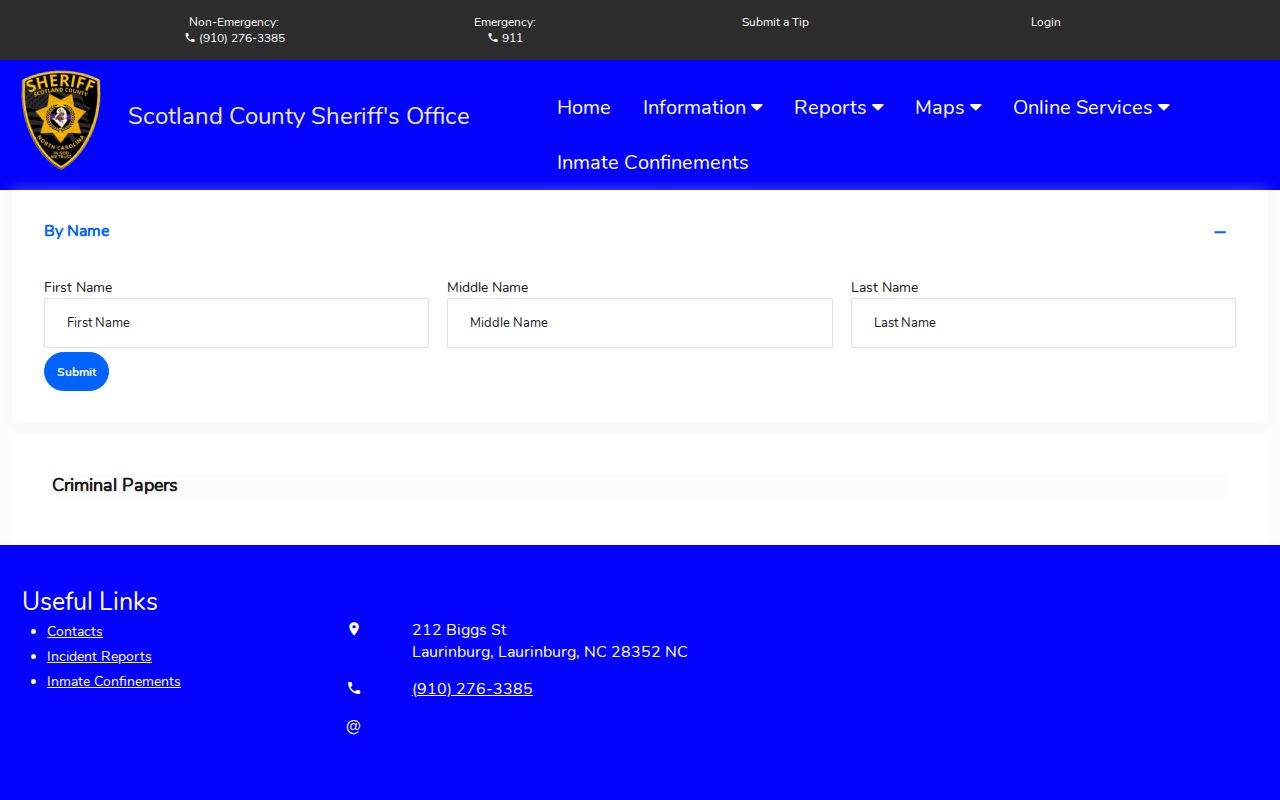
Use the search to locate a possible record, then verify the result with the issuing office rather than trusting an unconfirmed hit.
How Often Does the List Change?
No posted refresh interval, "Warrant Wednesday" schedule, or guaranteed update cadence exists for this list. An empty page does not mean every warrant has been cleared. The Sheriff's Office can add or remove a notice at any moment. Mobile Patrol and the official social accounts can serve as early signals. They may not carry every field, and posts can be edited or deleted. When timing matters, go straight to the live Most Wanted page, the criminal-papers search, SCSO Records, or the Clerk of Court.
What the Wanted List Cannot Confirm
A public wanted list has real gaps. It won't confirm a current address. It won't confirm an active warrant. Agency review may have corrected an entry with no update posted. Sometimes a person was picked up days ago, yet the listing still sits there. Plenty of active warrants never make the public list at all.
Want a firm answer? Ask SCSO Records or the issuing clerk to check current warrant status. Someone already in county custody looks different: run the booking search and look for an admit or confinement entry. Case events and outcomes live elsewhere, in the court system, not on the sheriff's list.
Unofficial sites add risk. They republish wanted photos and charge lines, often with errors. Check the original SCSO page first. Keep personal details to yourself. If you spot someone listed, report it privately to law enforcement rather than confronting the person.
From Wanted Notice to County Booking
A wanted notice ends one way: arrest. From there, the person enters the same custody sequence described on the Scotland County Busted Mugshots home page. Current Confinements shows who is locked up now. Last 24 Hour and Last 7 Days admit views cover recent arrivals. A name drops off the live roster after release, but the booking record stays on file with SCSO.
Custody can then shift. A state-prison sentence moves the question to NCDAC. Federal and immigration holds run through BOP or ICE. Each stage stands alone, so keep the original agency notice and any later court paperwork separate.